Rising Temperatures Reshape Arabian Gulf Marine Life, Study Reveals
New research from NYU Abu Dhabi has uncovered a stark divide in the survival strategies of marine species amid the Arabian Gulf's rapidly warming waters. While certain fish are evolving to withstand extreme heat, the region faces a troubling loss of biodiversity, signaling long-term risks for ecosystems and coastal economies.
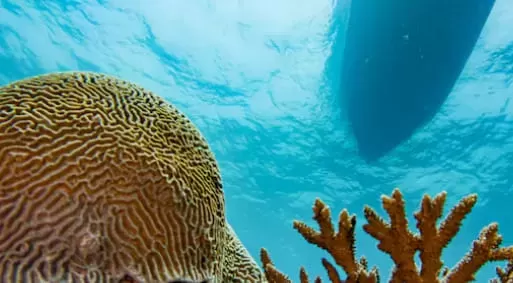
Published in Global Change Biology, the study analyzed coral reef fish populations in the Arabian Gulf—home to some of the planet's hottest marine environments—and compared them with those in the adjacent Gulf of Oman, where temperatures are milder. Fish in the Arabian Gulf demonstrated a heightened "thermal tolerance," surviving in waters exceeding 40°C at shallow depths. This resilience points to an evolutionary adaptation developed over decades of exposure to scorching conditions, according to researchers.
"Years of enduring extreme heat have pushed these species to their physiological limits, driving an adaptive response," said Daniel Ripley, lead author and researcher at NYU Abu Dhabi's Mubadala Arabian Centre for Climate and Environmental Sciences. However, this survival comes at a cost: the Arabian Gulf's fish diversity plummeted by over 80% compared to the Gulf of Oman. The disparity underscores that countless species unable to adapt have already disappeared from the region—a trend likely to worsen as global temperatures rise.
Surprisingly, the study upended expectations about how fish adapt. Researchers tested whether adjustments in heart function or metabolism enabled survival in hotter waters but found no significant differences between Gulf and Oman populations. This suggests that other unknown physiological or behavioral mechanisms may underpin their resilience.
The findings carry urgent implications for the UAE, where marine ecosystems underpin tourism and fisheries. In response, initiatives like Dubai's Reef project, launched at COP28, aim to counteract habitat loss. The deployment of 1,000 artificial reef modules seeks to bolster marine biodiversity by providing refuge and food sources for vulnerable species.
But restoration efforts may face an uphill battle. "Even species showing some adaptability are living on borrowed time," warned marine biologist John Burt, co-author of the study. "As warming accelerates, biodiversity losses could ripple through ecosystems globally. Understanding the drivers of thermal tolerance is critical to predicting which species might survive—and which won't."
Titled Narrow Margins: Aerobic Performance and Temperature Tolerance of Coral Reef Fishes Facing Extreme Thermal Variability, the research highlights the fragility of marine life in climate hotspots. It calls for expanded studies into adaptation mechanisms and accelerated conservation strategies to safeguard regions like the Arabian Gulf, where the stakes for both ecology and economy continue to rise.
As waters warm, the study serves as a reminder: adaptation has limits, and the window to protect marine biodiversity is narrowing.