Masdar's Largest Floating Solar Project in Malaysia
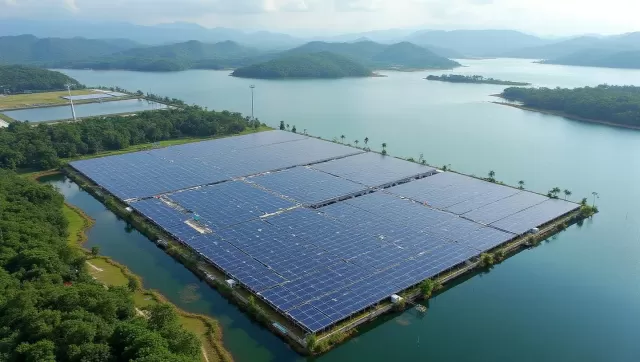
Masdar, the renewable energy powerhouse based in Abu Dhabi, has officially cemented its commitment to Southeast Asia's green transition by signing a landmark agreement to construct a massive floating solar facility in Malaysia. This venture represents the company's most significant floating solar undertaking to date, signaling a robust expansion of its renewable infrastructure footprint across the region.
Project Scope and Impact on Local Energy
The initiative is centered around the development of a floating photovoltaic plant at the Chereh Dam, located in the state of Pahang. With an investment valuation of $208 million, the facility is designed to cover an expansive surface area of nearly 3.84 million square meters. Once operational, the plant will boast a generation capacity of 200 megawatts, sufficient to supply reliable, clean electricity to approximately 100,000 residential units.
To bring this vision to life, Masdar has formed a strategic consortium with local Malaysian entities Citaglobal and Tiza Global. The electricity generated will be distributed through a power purchase agreement secured with Tenaga Nasional, the state-owned utility provider. This development is not merely a standalone project but serves as the inaugural initiative under a broader 10-gigawatt renewable energy framework established between Masdar and the Malaysian Investment Development Authority in 2023.
According to Masdar CEO Mohamed Al Ramahi, this venture underscores the company's technical mastery in floating solar technology and reinforces its status as a reliable energy partner within the Asian market.
Strategic Regional Growth
The Chereh Dam project is part of a calculated surge into the Asian renewable sector. It eclipses Masdar's previous undertakings in the region, including a major floating solar initiative in Indonesia. The company's recent timeline of activity illustrates this aggressive growth strategy:
Philippines: In January, plans were announced to construct renewable energy facilities with a total capacity of 1 gigawatt.
Indonesia: By April, agreements were finalized to develop multiple power plants, including a significant floating solar array that previously held the title for the company's largest in the region.
Global Portfolio Diversification
Beyond Southeast Asia, Masdar—co-owned by major players Taqa, Adnoc, and Mubadala—continues to diversify its assets worldwide. The company is currently active in over 40 nations, managing a combined capacity exceeding 51 gigawatts. Their long-term roadmap targets a total renewable capacity of 100 gigawatts by the end of the decade.
Recent months have seen substantial activity across various continents:
Europe: In October, the company expanded its European footprint by finalizing the acquisition of a 49.99 percent stake in a portfolio of solar photovoltaic plants in Spain from Endesa, valued at roughly $432 million. Additionally, Masdar recently integrated its first battery energy storage system in the UK and holds a 50 percent stake in East Anglia Three, one of the world's largest offshore wind developments.
Middle East: Closer to its headquarters, the company reached a financial milestone in August for the $1.1 billion Al Sadawi solar project in Saudi Arabia, executed in partnership with Korean and Chinese energy firms.
Central Asia: Collaborative renewable energy efforts are also underway with partners in Kazakhstan, Uzbekistan, and Azerbaijan.
Strengthening Energy Security
The collaboration in Malaysia is viewed as a critical step toward national energy independence. Mohamad Zakaria, executive chairman of Citaglobal, noted that the partnership instills confidence that the Chereh project will bolster Malaysia's economic resilience and energy security.
These efforts coincide with urgent global calls for accelerated adoption of green technologies. The International Renewable Energy Agency (IRENA) recently highlighted that while renewable adoption is increasing, the current pace is insufficient to meet 2030 climate targets. To align with the goals set during the Cop28 climate conference, global renewable capacity requires an annual growth rate of at least 16.4 percent.